




What is a Compression Fracture of the Spine?
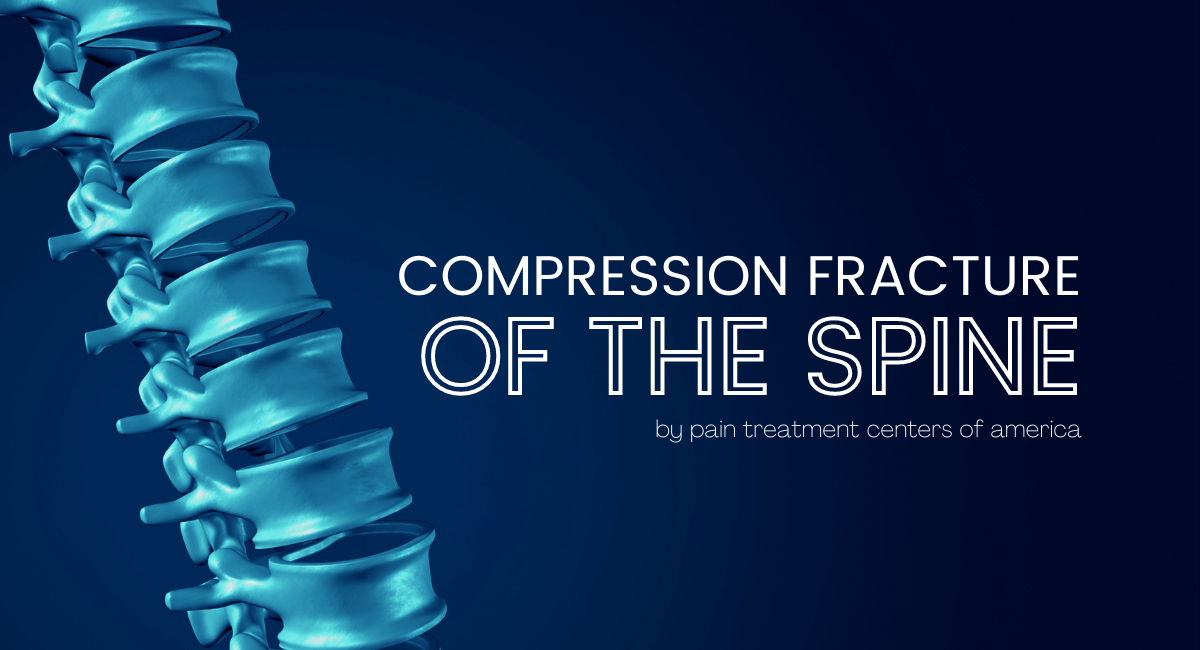
Compression Fracture Blog Graphic 3D spine

Compression fractures of the spine occur when the blocks of the spinal cord (vertebral bodies) collapse. Fractures can affect one or more vertebrae and typically form in your mid or lower back and cause pain and limited mobility.

At Pain Treatment Centers of America, we treat the chronic pain associated with spinal compression fractures. In this article, we hope to provide important and helpful information in learning about the condition and how PTCOA can help.

Causes of Compression Fractures

The most common cause of compression fractures is osteoporosis, a condition which causes bones to become weak and brittle. If you have osteoporosis, small activities like bending down or coughing can cause small hairline fractures. These hairline fractures add up and eventually cause the bones that form your spine (vertebrae) to collapse.

The following factors may increase your chances of developing osteoporosis:

  • Race and Gender : Women are at higher risk than men. Specifically, White and Asian women are at the highest risk.
  • Age : Chances are higher in women around the age of fifty and increase with age.
  • Weight : Naturally thin women may have impaired bone quality, putting them at higher risk.
  • Early Menopause : Women who undergo menopause before age fifty are at higher risk.
  • Smokers : People who smoke lose bone thickness faster than non-smokers, putting them at a higher risk.

Hemangioma (blood vessel growth), trauma, and certain types of cancer can cause compression fractures. Individuals at the highest risk for spinal compression fractures include:

  • People with osteoporosis.
  • People with bone cancer or cancer that has originated in one area and spread to the bones, including multiple myeloma and lymphoma (sometimes a spinal fracture is the first sign that someone has cancer).
  • Women above fifty years of age that have already gone through menopause.

Symptoms of a Compression Fracture

When compression fractures first start developing, they may not cause symptoms. Over time, you could start experiencing symptoms including but not limited to:

  • Back pain that gradually gets worse over time, or comes on suddenly and sharply.
  • Pain that gets worse when you stand or walk, but improves when you lie down.
  • Trouble bending or twisting your body.
  • Decreasing height.
  • A curved, stooped shape to your spine.

The pain typically happens with a slight back strain during an everyday activity like:

  • Lifting a bag of groceries.
  • Bending to the floor to pick something up.
  • Slipping on a rug or making a misstep.
  • Lifting a suitcase out of the trunk of a car.
  • Lifting the corner of a mattress when changing bed linens.

Some people feel almost no symptoms from spinal compression fractures. The cracks can happen so gradually that the pain is relatively mild or unnoticeable. For others, the pain may turn into a chronic backache in the injured area.

Symptoms of Multiple Spinal Compression Fractures

Multiple compression fractures will cause your spine to change a lot. Part of your vertebrae may collapse because the small cracks make your vertebrae unable to support the weight of your spine. Symptoms of multiple compression fractures include:

  • Height loss : The spine gets a little bit shorter with each fracture of a spinal bone. Eventually, after several vertebrae collapse, you will look noticeably shorter.
  • Kyphoses (curved back) : When vertebrae collapse, they form a wedge shape, which causes the spine to bend forward. Eventually, you will have neck and back pain as your body tries to adapt.
  • Stomach problems : A shorter spine can compress your stomach, causing digestive problems like constipation, a weak appetite, and weight loss.
  • Hip pain : The shorter spine brings your rib cage closer to your hipbones. You will feel severe pain if those bones are rubbing against each other.
  • Breathing problems : If the spine is severely compressed, your lungs may not work properly and cause trouble with your breathing.

Symptoms are different for everyone, so let your doctor know if you’re feeling back pain or other symptoms.

Kyphoplasty/Vertebroplasty for Compression Fracture

Vertebroplasty/kyphoplasty is a treatment option offered by Pain Treatment Centers of America for anyone with spinal compression fractures. This minimally invasive treatment usually does not require anesthesia and allows you to return home with minimal restrictions.

Visit our Kyphoplasty/Vertebroplasty procedure page to learn more about this treatment option.


Compression Fracture Treatment with PTCOA

Spinal compression fractures can easily go unnoticed and be mistaken for joint and muscle pains in the back. If you are experiencing the symptoms listed above, talk with a physician at Pain Treatment Centers of America to find the source of your pain, and help you get back to a healthy and happy lifestyle.

Find a location and schedule an appointment today.


By Bob Berendsen February 1, 2026
Chronic or acute pain has the potential to significantly impact your daily life, making even everyday tasks a hassle. Pain Treatment Centers of America believes that knowing your medication options is a crucial step in building an appropriate, personal pain management strategy. While many treatment options are available, pharmacologic therapy has been the peak of comprehensive care. Types of Medications Used in Pain Management Pain medications are not universalized. The selection of the right prescription depends on the pain type, severity, and medical history. Common categories include: 1. Nonsteroidal Anti-Inflammatory Drugs (NSAIDs) NSAIDs, such as ibuprofen or naproxen, tend to be the first line of defense for low levels of pain. They reduce swelling and provide comfort associated with conditions like arthritis, back pain, or joint injuries. In some patients, however, they can affect the stomach or kidneys. Therefore, careful studying and dosing guidance from a professional is key. 2. Acetaminophen Acetaminophen is mostly for general pain reduction and is sometimes combined with other treatments. Unlike NSAIDs, it doesn’t target swelling. Nonetheless, it can be effective for pain relief and daily improvement. 3. Muscle Relaxants For pain caused by muscle spasms or tension, muscle relaxants can provide relief. These medications work by calming overactive muscles and are usually prescribed for short-term use to prevent dependency or side effects. 4. Antidepressants and Anti-Seizure Medications Certain antidepressants and anti-seizure drugs can treat neuropathic (nerve) pain. They work by altering how the nervous system processes signals of pain throughout your body. Even if you do not experience depression or seizures, these medications assist with pain control. 5. Opioids Opioids are strong pain-relieving medications chosen for more potent pain when other options aren’t doing the trick. At Pain Treatment Centers of America, we practice strict guidelines to minimize risks, evaluate patient progress, and ensure healthy, responsible use. A combination of Opioids can be introduced to other treatments as part of a multimodal pain management plan. Personalized Pain Management The effectiveness of medications is best when combined with other therapies; physical therapy, interventional procedures, and lifestyle changes. We work closely with each patient to structure a plan that focuses on the root cause of pain, not just the signs. Every treatment plan is carefully engineered, giving thought to variables like medical history, existing conditions, and possible side effects. Patients are taught how to use the medication safely, dosing schedules, and expectations of each prescription. Take the Next Step Understanding your medication options enables you to take charge of your pain and improve your life overall. If you’re having issues with chronic or acute pain, our professionals at Pain Treatment Centers of America will gladly help. We mix the most up-to-date pharmacologic therapies with personalized care to provide comfort, improve function, and enhance your total well-being. Schedule a consultation today to learn which pain management medications are a good fit.
By Bob Berendsen January 15, 2026
Winter, widely considered the season of comfort, is the time for indoor relaxation and quiet contemplation. However, winter also brings with it some very real dangers, including cold, dark, and slippery surfaces. For older adults or those dealing with chronic pain, a small slip on these surfaces can lead to serious injuries that take months to heal. The good news? You can train your body to handle these challenges. Let’s explore some simple, safe exercises you or your loved ones can do from the comfort of your home to build your winter-proof stability. Why Winter Increases the Risk of Falls Cold weather brings more than just chilly air. It changes the way we move, how our muscles respond, and even how we think about walking. When it’s icy, people tend to tense up, take shorter steps, and look down more often. Muscles also get tighter in the cold, which reduces flexibility. Plus, all those bulky layers of clothes mess with your center of gravity and limit how quickly you can react if you start to lose your balance. Your boots might be waterproof and warm, but they're probably not giving you the ankle support or ground feel you'd get from your regular shoes. Then there's the simple fact that many of us move less in winter. Maybe you skip your daily walks when it's freezing, or you stop going to that exercise class because driving feels too risky. But here's the catch: the less you move, the weaker you get, and the weaker you get, the more likely you are to fall. Building a Foundation To prevent this, you simply need to work on two main things: balance and strength. Physical therapy and balance-focused exercises train your muscles, joints, and nervous system to respond faster and more effectively when something throws you off. Balance Training Balance isn’t just about standing still without wobbling. It’s about how your body reacts when something throws it off center. When you step on ice, for example, your brain and muscles have to communicate in an instant to keep you upright. If that connection is slow or weak, you’re more likely to fall. Some simple ways to train your balance include: ● Single Leg Stands : Stand near a sturdy surface like a countertop or wall for support. Lift one foot slightly off the ground and hold that position for 10–15 seconds. Then switch sides. At first, you might wobble, but that’s perfectly normal. Over time, your legs, ankles, and core muscles will get stronger, and your balance will improve. Try doing 3 rounds on each leg daily. ● Heel-to-Toe Walk: Imagine you’re walking on a tightrope. Place one foot directly in front of the other, heel touching toe, as you move slowly across the room. This simple drill strengthens your stabilizing muscles and sharpens coordination. Keep your eyes forward, not down, and use a wall for light support if needed. ● Side Leg Raises: Hold onto a sturdy chair or counter. Lift one leg out to the side while keeping your back straight and your toes facing forward. Lower it slowly and repeat. This exercise builds hip strength, which plays a big role in staying upright on slippery ground. ● Weight Shifts: Stand with your feet hip-width apart and shift your weight from one leg to the other slowly. Feel your balance change from left to right. This gentle exercise teaches your body to adjust quickly. Strength Training Balance and strength go hand in hand. When your muscles are strong, they act like shock absorbers, keeping you stable even when your footing isn’t perfect. Focus on the muscles that support your posture and help you move safely. Here are a few simple exercises to include in your daily routine: ● Chair Squats: Sit down and stand up from a sturdy chair without using your hands for support. Keep your feet flat on the floor and your knees aligned with your toes. This move strengthens your thighs, hips, and glutes—key muscles for stability and control. ● Heel Raises: Stand behind a chair or counter and slowly lift your heels so you’re standing on your toes. Lower back down after holding for a few seconds. This helps strengthen your calves and ankles, improving the small muscle reactions that keep you upright when you slip. ● March in Place: Lift your knees high as if you’re marching. Do this for one to two minutes, rest, and repeat. Marching builds leg endurance and helps train your coordination. ● Core Squeezes: While sitting or standing, tighten your stomach muscles as if you’re zipping up a snug jacket. Hold for 10 seconds, then release. A strong core helps your upper and lower body work together to keep you balanced. These movements may look simple, but they’re powerful. Doing them for just 10–15 minutes a day can make winter walks safer and less stressful. Warming Up Before You Head Outdoors Cold weather tightens muscles and slows blood flow, making your body less responsive. That’s why warming up before heading outside is so important. Think of it as insurance against sudden slips. Try a short warm-up routine before stepping out: ● Arm circles to loosen shoulders. ● Gentle knee bends to wake up leg muscles. ● Shoulder rolls and neck stretches to improve mobility. ● A quick indoor walk or stair climb to raise your heart rate slightly. It’s also wise to check your footwear. Look for rubber soles with deep treads for better traction. Avoid smooth or worn-out shoes, and consider ice grips that attach to your boots if you live in a particularly snowy area. Winter doesn't have to be a season of fear. By investing just 10-15 minutes a day in these simple, safe exercises, you can build the strength and confidence you need to navigate the season safely. You are giving your body the tools it needs to stay upright, stable, and strong. When to Ask for Professional Help If you’ve had a fall before or feel nervous about losing your balance, it’s a good idea to get help from a physical therapist or pain specialist. They can assess your movement patterns and create a personalized exercise plan to strengthen weak areas. At Pain Treatment Centers of America , we often see patients who avoid movement due to fear of falling or pain. With guided therapy, they rebuild strength and confidence. Therapists also teach safe walking techniques, posture corrections, and stretching routines that make winter mobility much easier. Even if you’re recovering from an injury or dealing with chronic conditions like arthritis, a professional can tailor exercises that improve stability without aggravating pain. Our team at Pain Treatment Centers of America can provide you with the comprehensive care you need to manage your pain. Contact us to book an appointment!
How PTCOA Physical Therapy Helps Relieve Winter Stiffness
By Bob Berendsen December 3, 2025
While it’s easy to stay bundled up indoors, that approach often makes stiffness worse. With physical therapy, you can manage to keep your body resilient.
Health Anxiety | PTCOA
By Bob Berendsen November 5, 2025
Learning to identify and manage health anxiety can help you regain peace of mind and focus on your overall well-being.
Tips for Autumn Weather Changes ​| PTCOA
By Bob Berendsen October 1, 2025
As summer fades and autumn sets in, the drop in temperature, fluctuating humidity, and shorter days can trigger discomfort for those with joint issues.
Pain and Sleep | Pain Treatment Centers of America
By Bob Berendsen September 1, 2025
As the seasons shift, many people notice changes not only in the weather but also in how their body feels.
Show More